Space-based Surveys
Introduction
One of the main factors limiting the precision of astronomical observations from the ground is the Earth’s atmosphere. Telescopes in orbit or beyond are unaffected by turbulence in the atmosphere and are above clouds which can obscure our view of the stars from the ground. Space-based telescopes can therefore deliver the most precise timeseries photometry, capable of detecting subtle features in microlensing lightcurves. Happily there are a number of current missions with microlensing objectives, which we describe below.
NASA’s Nancy Grace Roman Space Telescope
|
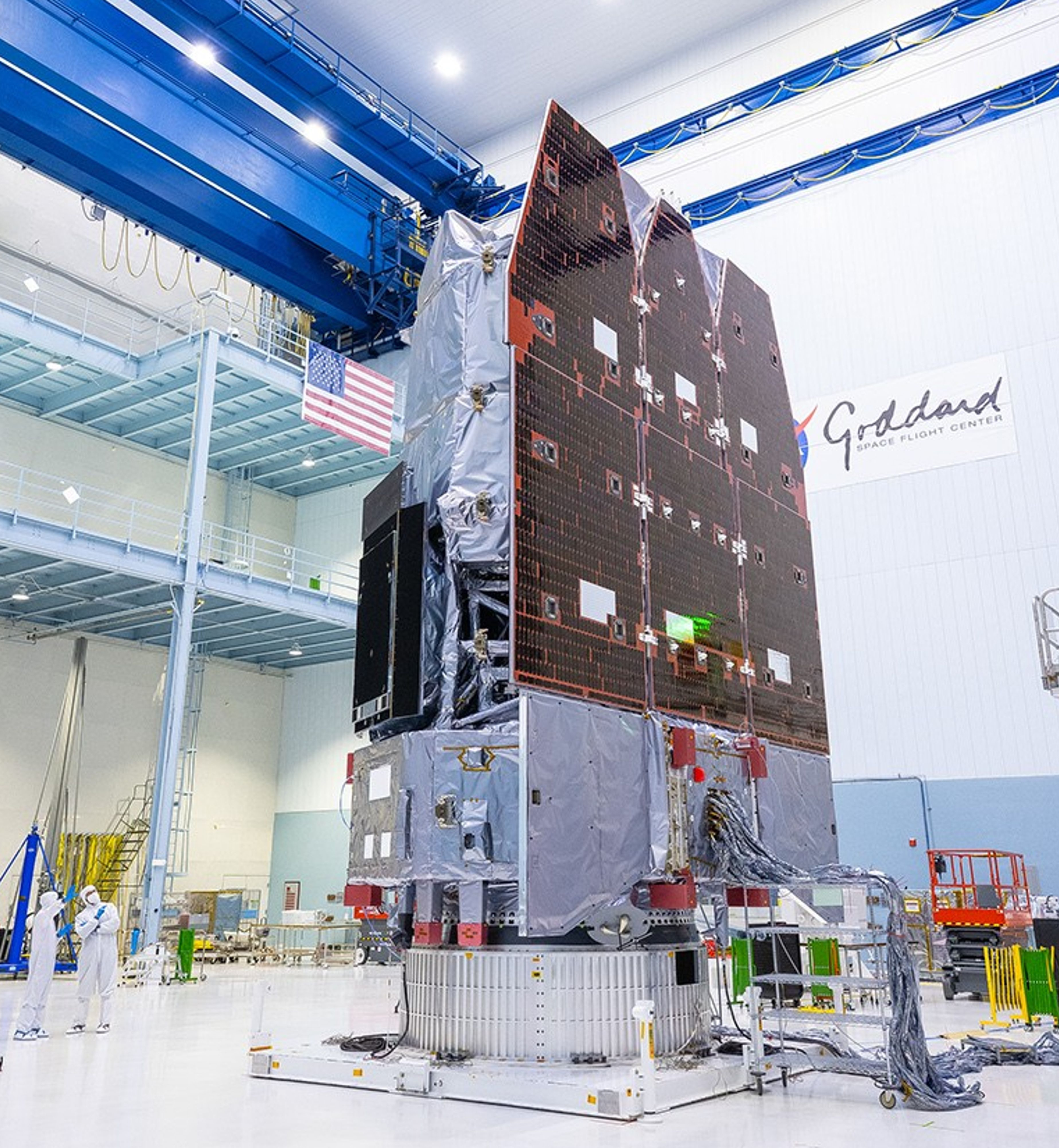
The Nancy Grace Roman Space Telescope is a 2.4m telescope optimized to operate as a wide-area survey
machine. It's instrumentation includes a Wide Field Imager (WFI) with a 0.28 sq.deg. field of view
and coronograph. The WFI supports 8 filters plus a grism and prism for spectroscopy, and the whole
spacecraft is designed to slew and settle quickly compared with previous missions. The majority of Roman's time will be spent conducting the Core Community Surveys with the WFI. These include the High Latitude Wide Area Survey (which will take ~17 months), the High Latitude Time Domain Survey (~6 months), and the Galactic Bulge Time Domain Survey (GBTDS, ~15 months). The remainder of Roman's time will be dedicated to General Astrophysics Surveys, which can be proposed. The first such GA survey is the Galactic Plane Survey. As one of the core science drivers for the Roman Mission, the GBTDS is designed to detect microlensing events. It will consist of 6 observing seasons lasting ~70 days each. During a season, Roman will stare a selected fields in the Galactic bulge and Galactic center, imaging it every ~12min. The high-precision, densely sample timeseries photometry will be ideal for detecting thousands of bound planets Penny et al (2019), ApJS, 241,3P and hundreds of Free-Floating Planets Johnson et al. (2020), AJ, 160, 123. The same data will also reveal tens of thousands of transiting exoplanets Wilson et al. (2023), ApJS, 269, 5. The Roman Galactic Exoplanet Survey Project Investigation Team (RGES-PIT) is tasked with preparing for the GBTDS and the analysis of it's data, which will be immediately public. The RGES-PIT has developed extensive microlensing resources which are hosted on the team's website. |
|
| Agency | NASA |
| Launch date: | Aug 2026 |
| Websites |
Mission overview
Telescope information Roman's Core Community Surveys Roman Science Community Detailed Roman Documentation Roman Galactic Exoplanet Survey Project Infrastructure Team website |
| Telescope aperture | 2.4m telescope |
| Orbit | Lagrangian Point 2 |
| Field of view | 0.28 sq.deg |
| Pixel scale | 0.11 arcsec/pixel |
| Passbands |
F062 (0.48 - 0.76microns) F087 (076 - 0.869microns) F106 (0.927 - 1.192microns) F129 (1.131 - 1.454microns) F158 (1.338 - 1.774microns) F184 (1.683 - 2.00microns) F213 (1.95 - 2.30microns) F145 (0.927 - 2.00microns) G150 (1.0 - 1.93microns, R=461) P127 (0.75 - 1.80microns, R=80-180) |
The Euclid Space Telescope
|
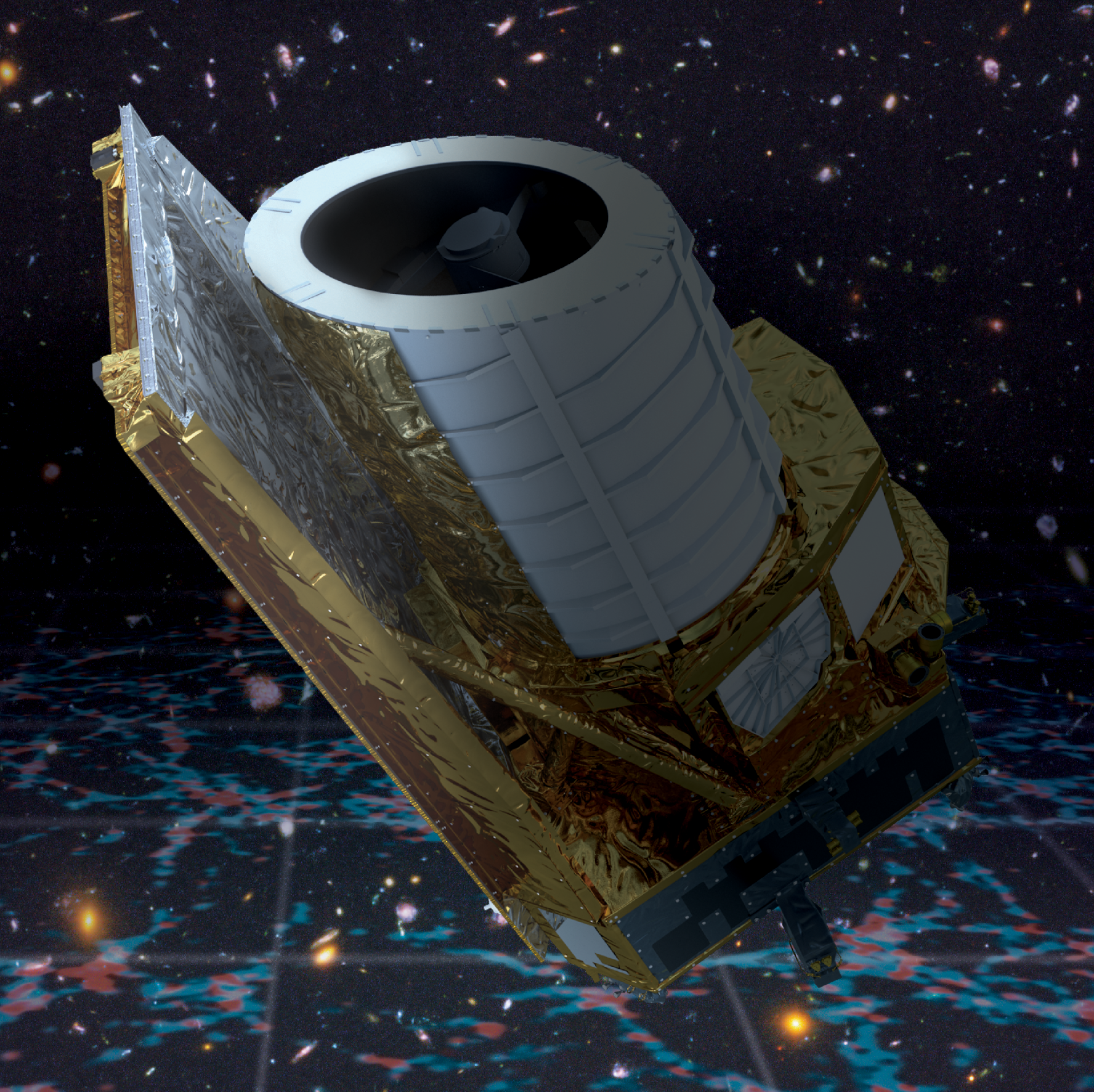
The Euclid Space Telescope is a 1.2m optical/infrared telescope with a wide field of view.
It hosts two instrument, an optical imager VIS and near infrared imager NISP, both of which
have fields of view of ~0.55 sq.deg. While Euclid's primary mission goals are to determine the nature of dark energy and dark matter, it will still make microlensing observations through it's early science programs. Taking advantage of the fact that Euclid launched in advance of the Roman Mission, Euclid delivered deep, high-resolution imaging of >60 million stars within the Roman Galactic bulge survey region. These data will allow significantly improved measurements of stellar proper motions for all stars within the field, since they can be combined with Roman data to effectively extend the time baseline of observations. The data will allow us to better distinguish between the flux from lens and source stars, and hence to improve our measurements of the mass of the lensing systems. |
| Agency | European Space Agency |
| Launch | 1 July 2023 |
| Website | Euclid Website |
| Telescope aperture | 1.2m telescope |
| Orbit | Lagrangian Point 2 |
| Field of view | VIS instrument: 0.56 sq.deg; NISP instrument 0.55 sq.deg. |
| Pixel scale | VIS: 0.16 arcsec/pixel, NISP: 0.3 arcsec/pixel |
| Passbands | VIS: one wide visible band (550-900 nm); NISP: Y (0.95 to 1.192 µm), J (1.192 to 1.544 µm), H (1.544 to 2 µm), plus blue 1 blue grism (0.92 to 1.3 µm); and red grisms (1.25 to 1.85 µm) |
Earth 2
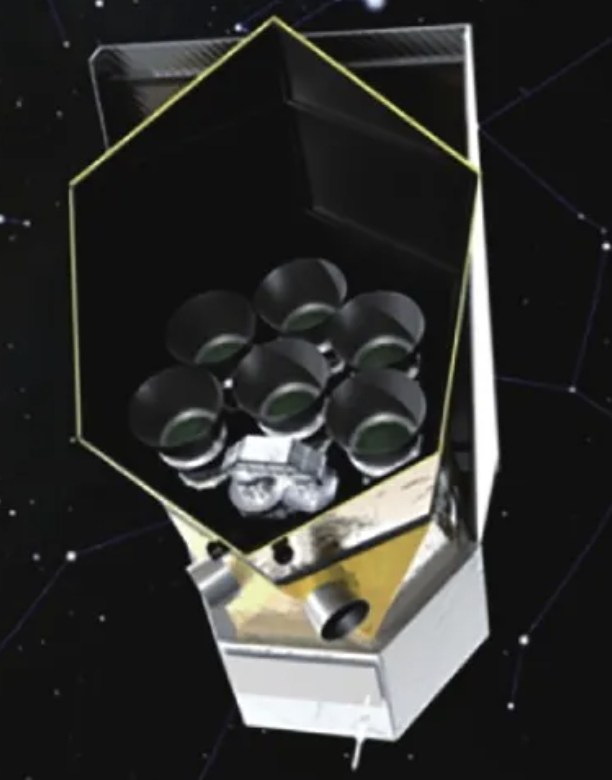
| The Earth 2 mission is a novel combination of seven small telescopes: six 28cm telescopes dedicated to a study of transiting planets and one 35cm telescope for microlensing. The latter telescope has a wide 4 sq.deg field of view and is equipped with red-optical and near infrared filters. Once launched in 2028, the mission will conduct a survey of the Galactic bulge. |
|
| Agency | Chinese Academy of Sciences | |
| Launch date: | Fall 2028 | |
| Websites |
Mission website
|
|
| Telescope aperture | 6x0.28m telescopes for transits 1x0.35m telescope for microlensing | |
| Orbit | Lagrangian Point 2 | |
| Field of view | 4 sq.deg. (microlensing telescope) | |
| Pixel scale | 0.4 arcsec/pixel | |
| Passbands | Z, Y, J, H + narrowband |