Caustics
Introduction
In microlensing, the caustic corresponds to the position(s) of the source for which the solution of the lens equation results in infinite magnification. For a point lens (e.g. a single star), the magnification (A) equation is: \(A = \frac{u^{2} + 2}{u(u^2 + 4)^{1/2}}\), where u is the source positions. If you solve this equation for u=0, you will find that the magnification, A, is infinite. Thus, for a point lens, the caustic is a single point at u=0.
For a 2-body lens (such as a star+planet), the magnification equation is more complex, but it remains true that there are solutions to this equation for which the magnification is infinite. In this case, the caustic is a closed curve, or set of closed curves, and at those curves the magnification diverges to infinity.
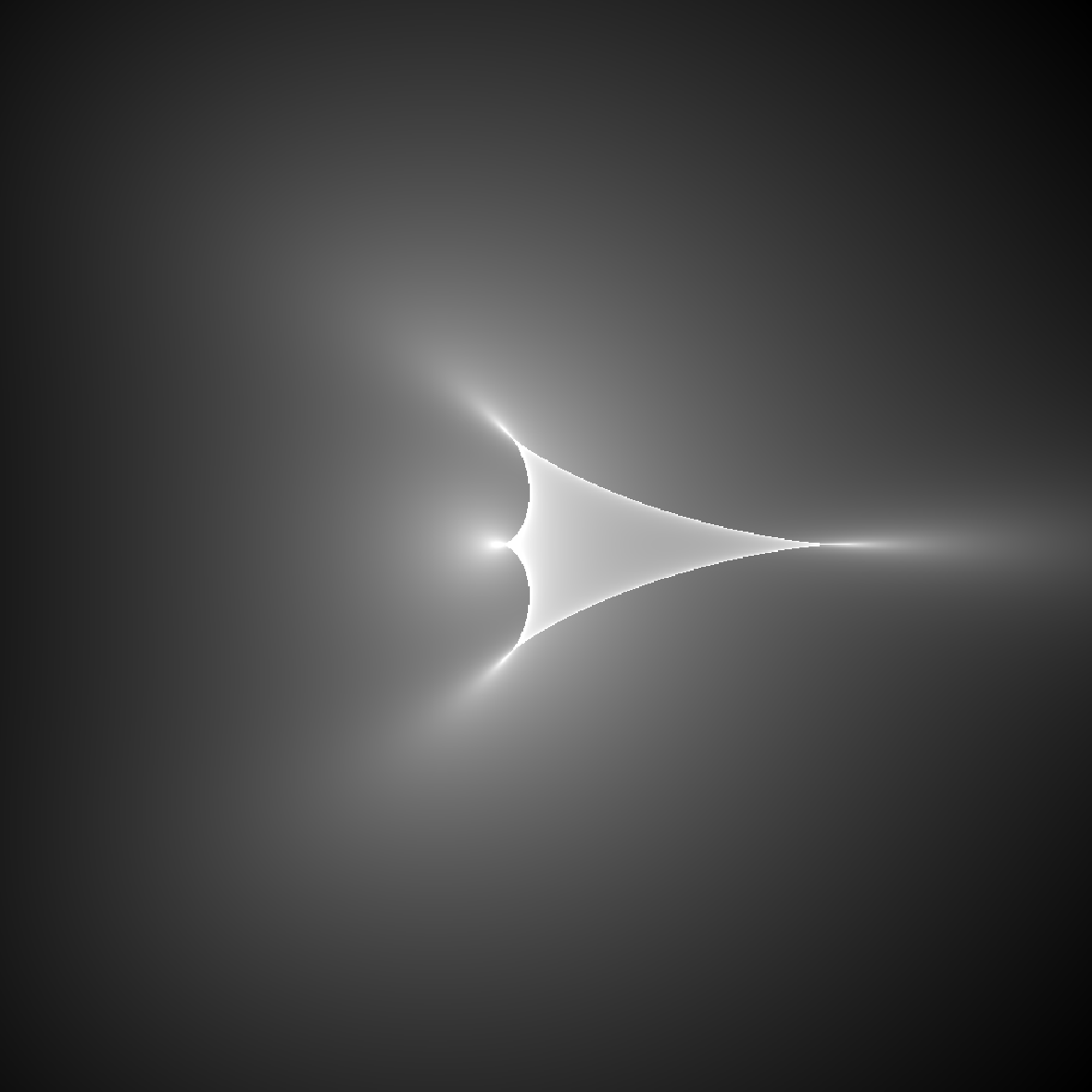
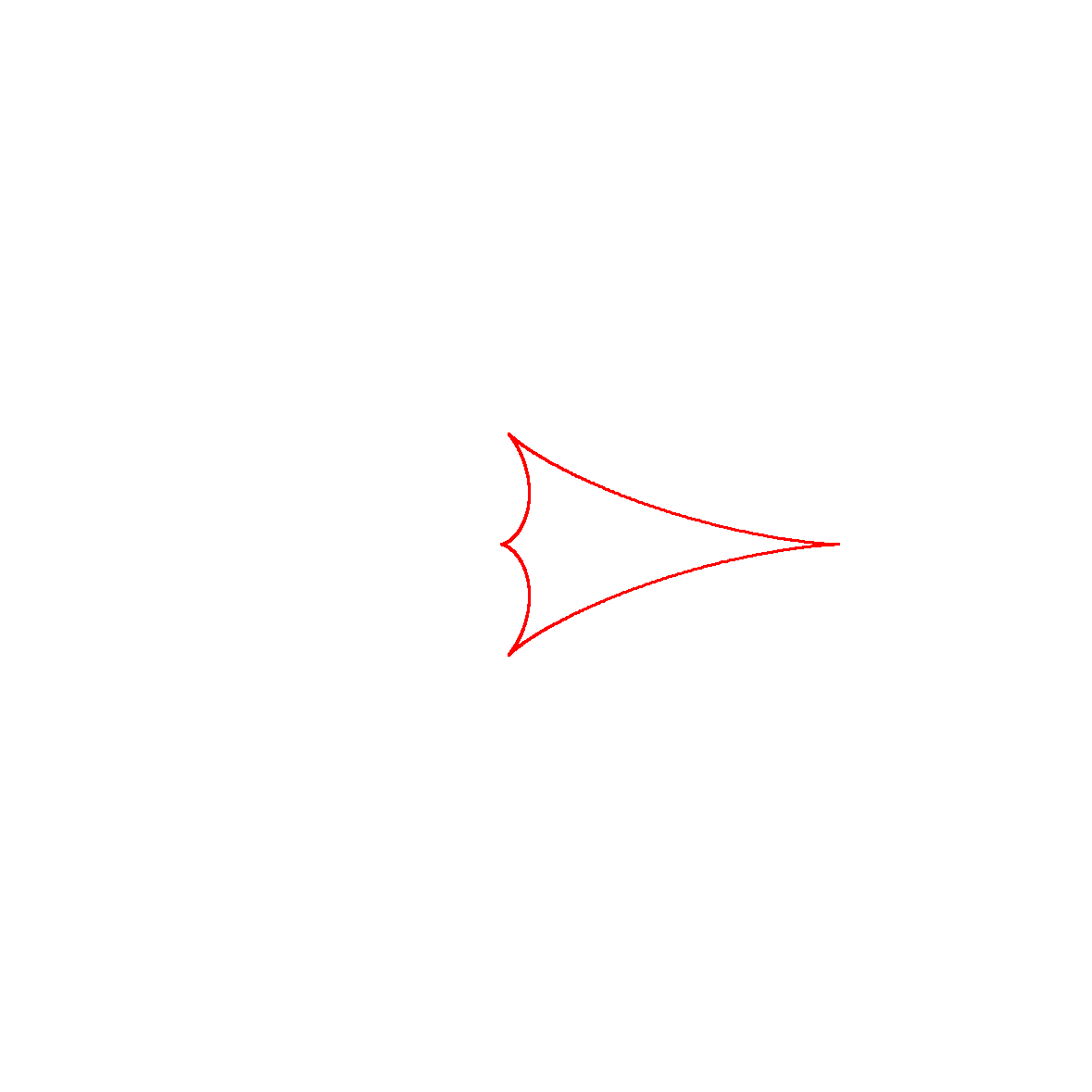
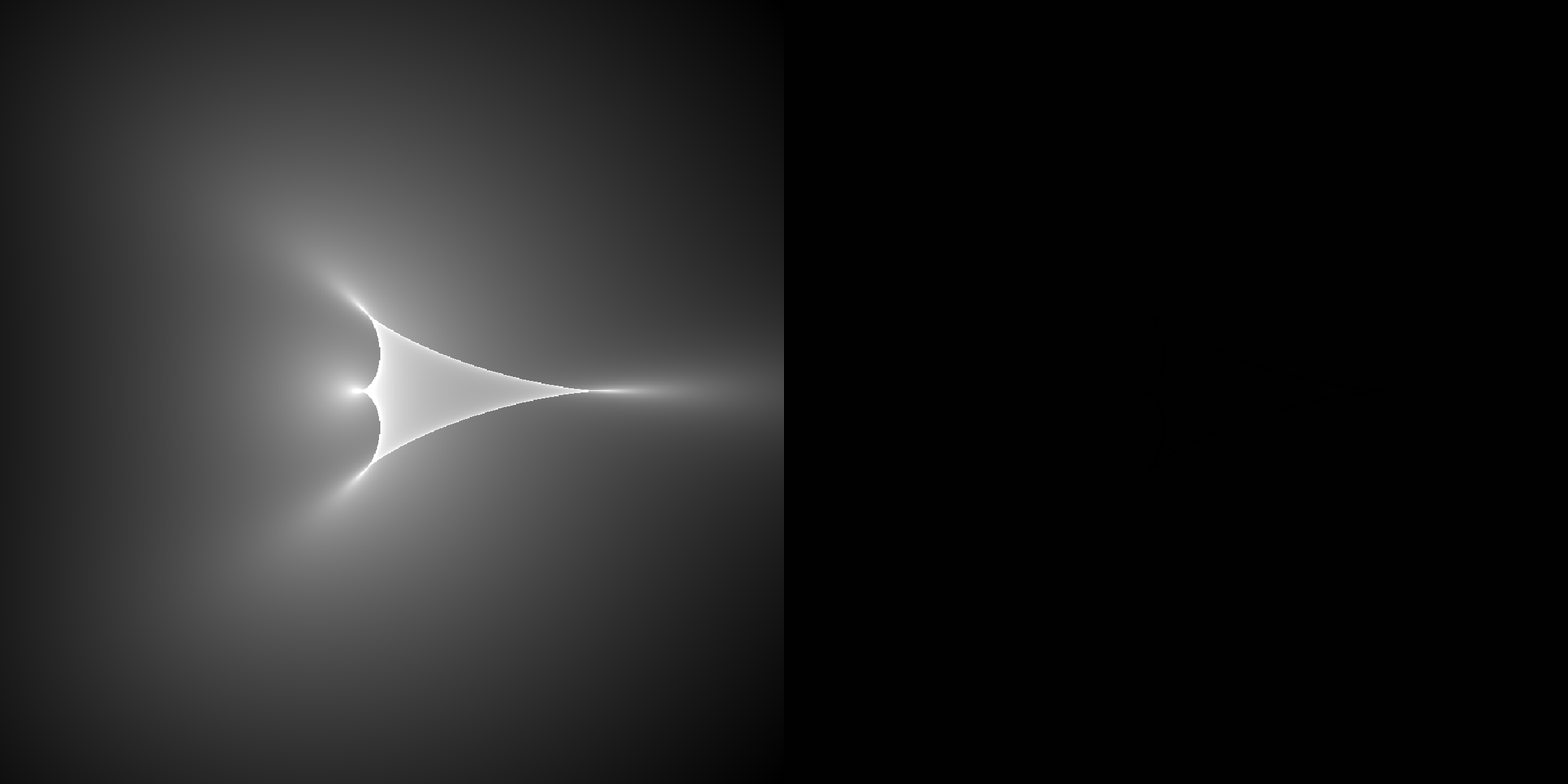
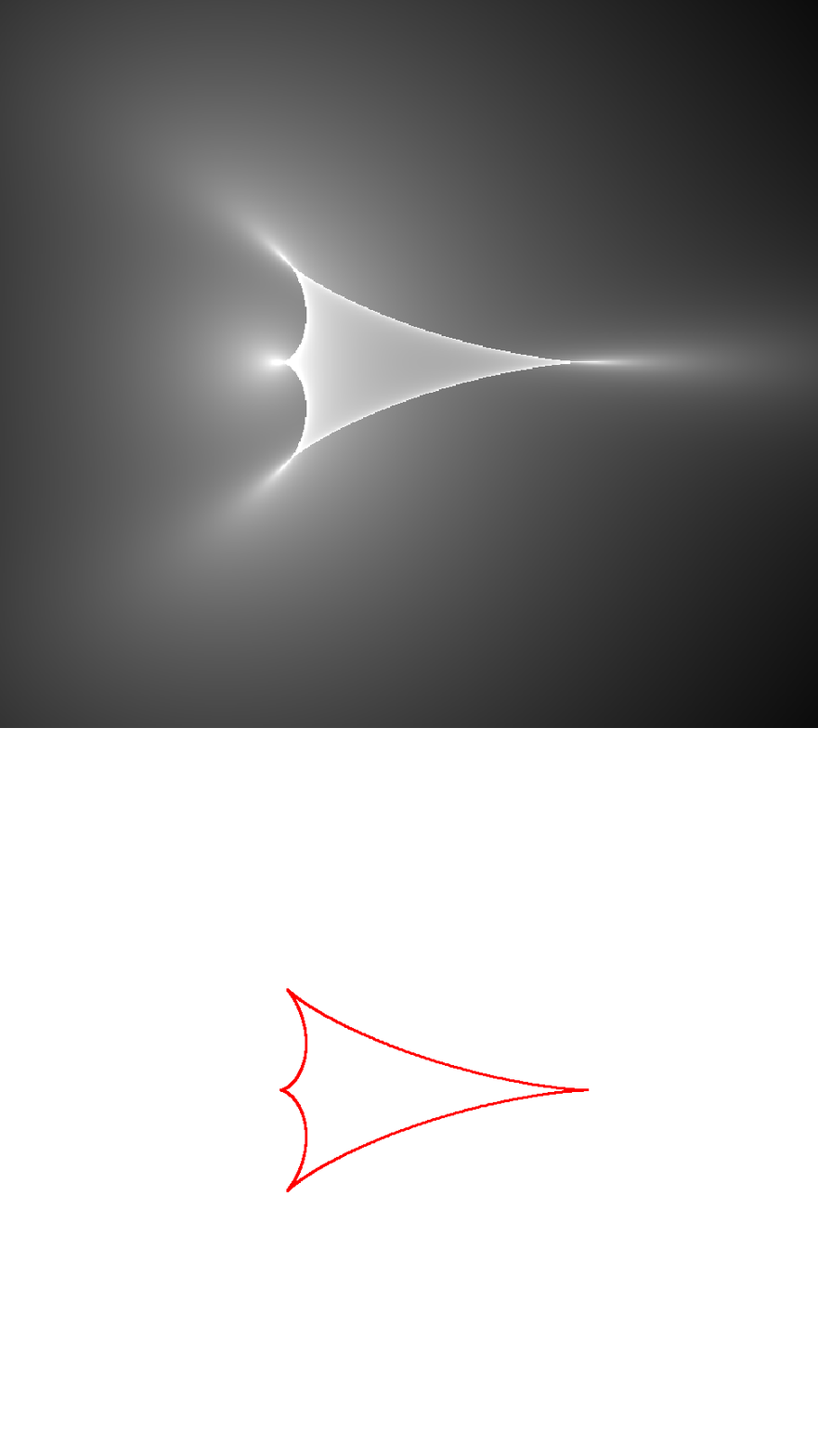
By solving the lens equation, it is possible to calculate the magnification of the source at any (projected) position relative to the position of the lens. The magnification map is a visualization reflecting the calculated magnification at a given point (brighter=more highly magnified). The image below shows the magnification map and caustic structure for a 2-body lens.
| Magnification Map | Caustic | Magnifcation Map & Caustic |
|
|
|
Some general rules about caustics
- They are closed curves. Therefore, they have an inside and an outside. (The perimeter of a square or a triangle are other examples of closed curves. But remember that the caustic refers to the edge of the shape and not the shape itself.)
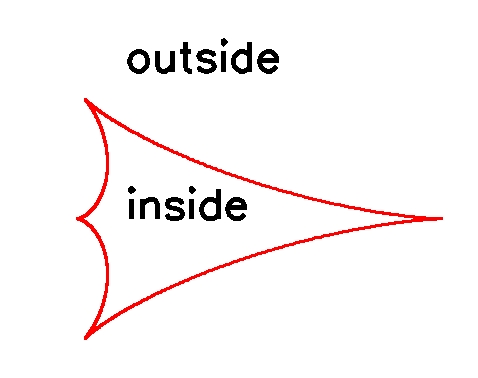
- The caustic has zero width. (A mathematical line also has zero width.)
- The magnification diverges to infinity at the caustic.
- The magnification inside of the caustic is always greater than the magnification outside of the caustic.
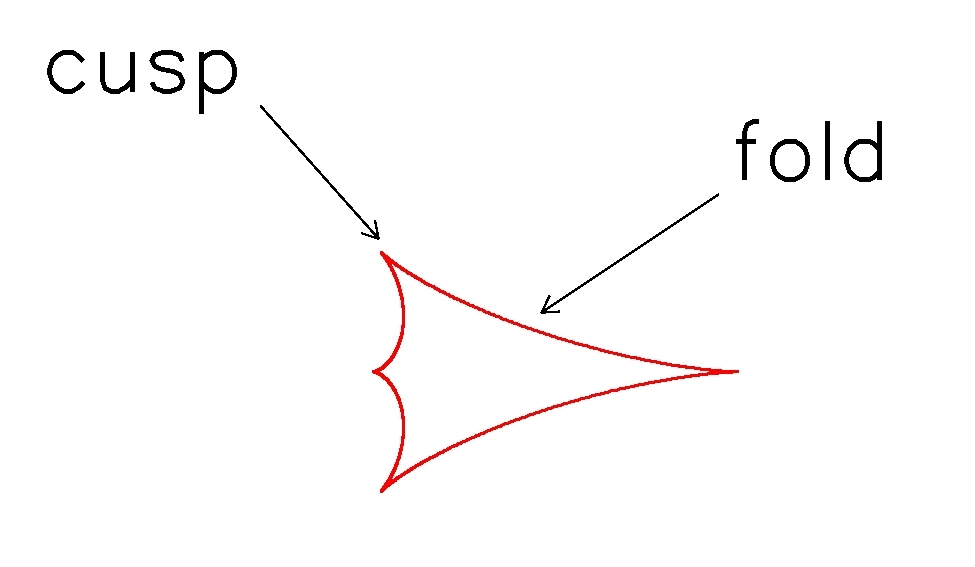
- The points of a caustic are called cusps. The curved segments connecting the cusps are called folds
How do caustics relate to light curve features?
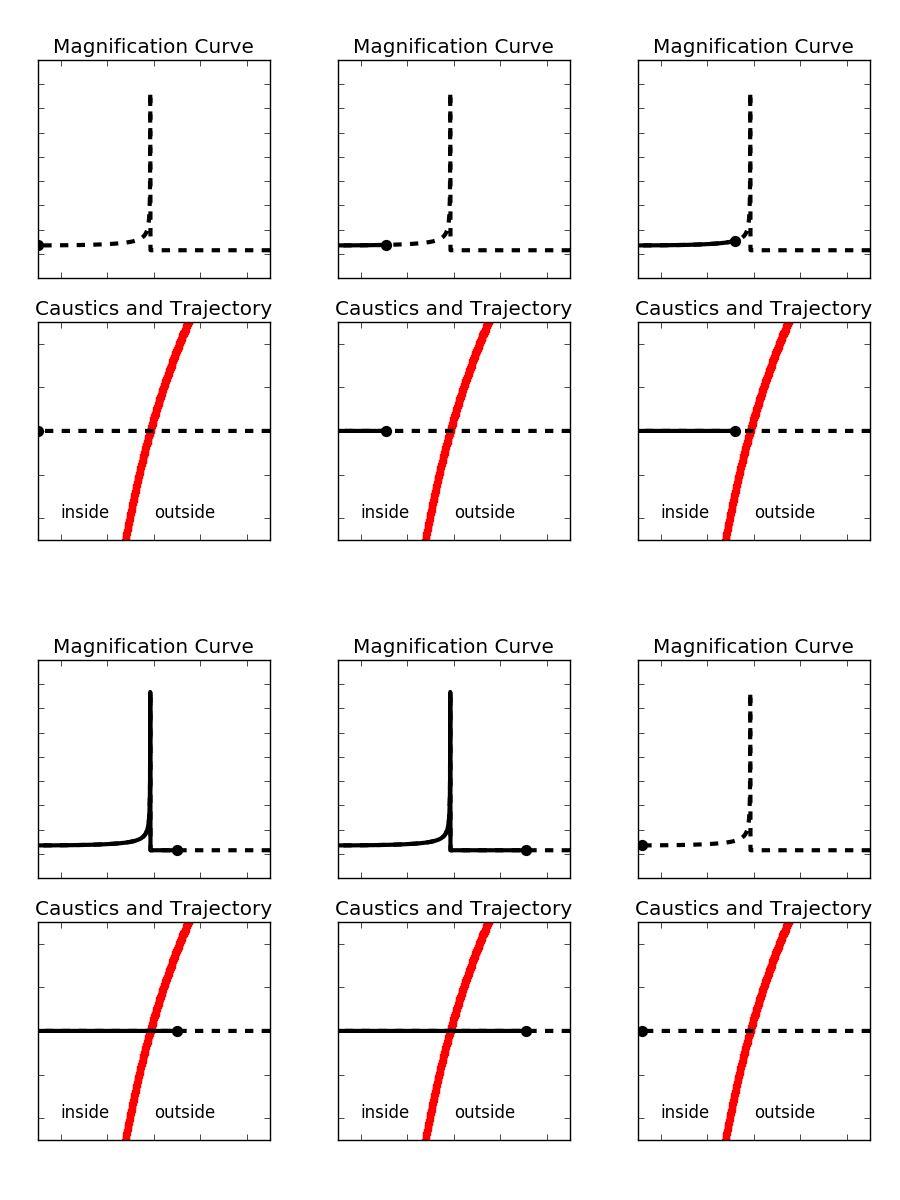
The following animation shows what happens when a source crosses into a caustic (aka a caustic entrance):
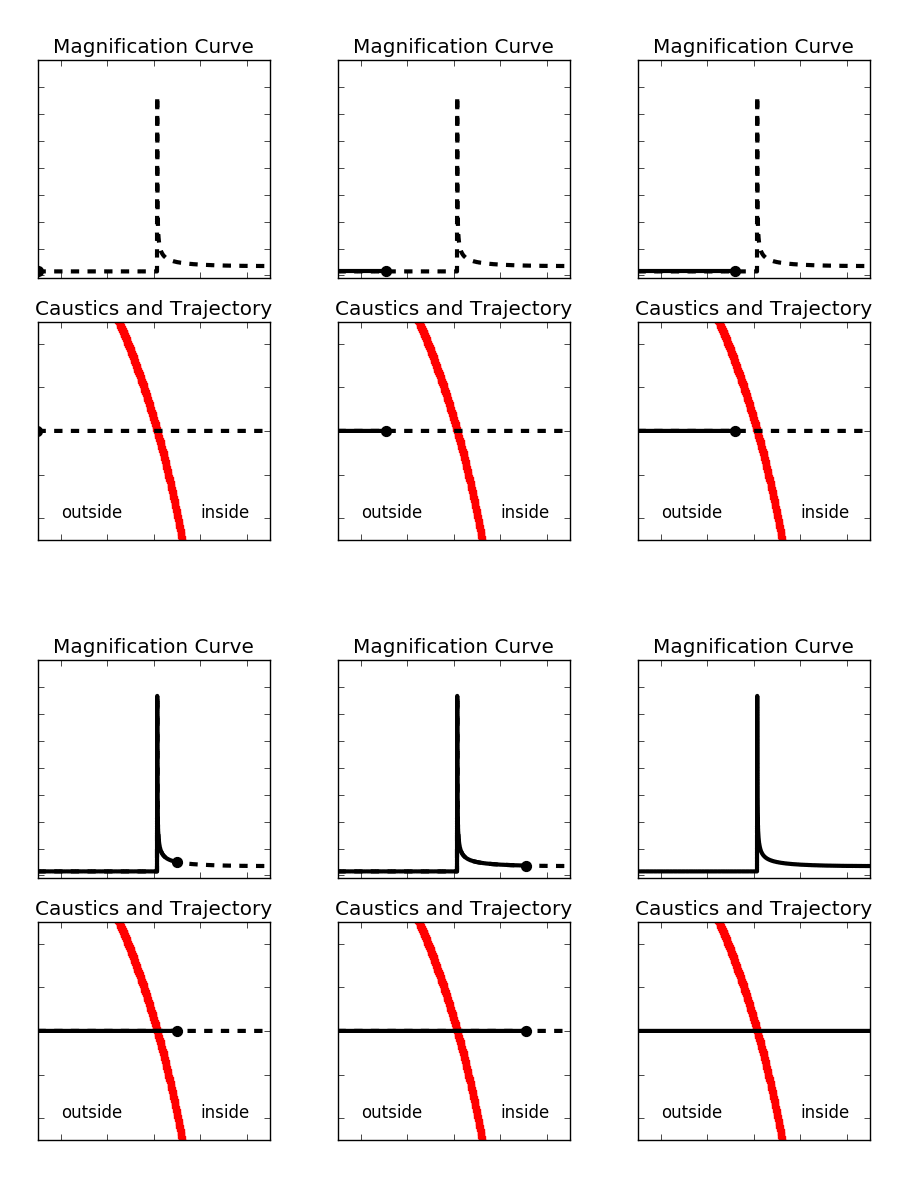
There is a sharp jump in magnification when the source crosses into the caustic (red). Once inside the caustic, the magnification declines but always stays above the level outside the caustic.
A caustic exit is the inverse of a caustic entrance: the magnification increases as the source approaches the caustic, then drops abruptly when the source crosses outside the caustic.
Because the caustic is a closed curve, there will always be two caustic crossings: an entrance and an exit. The figure below shows the magnification curve for a source crossing the caustic of a binary star lens. Can you identify the caustic entrance and the caustic exit in the light curve?
The caustic structure is often used as a kind of short-hand for the full magnification map because the features of the magnification map can be inferred from the caustic structure. Recall that a cusp is one of the points of the caustic. The animation below shows how the magnification is increased near the cusps.
A source passing near a cusp can produce a magnified signal without actually crossing the caustic directly:
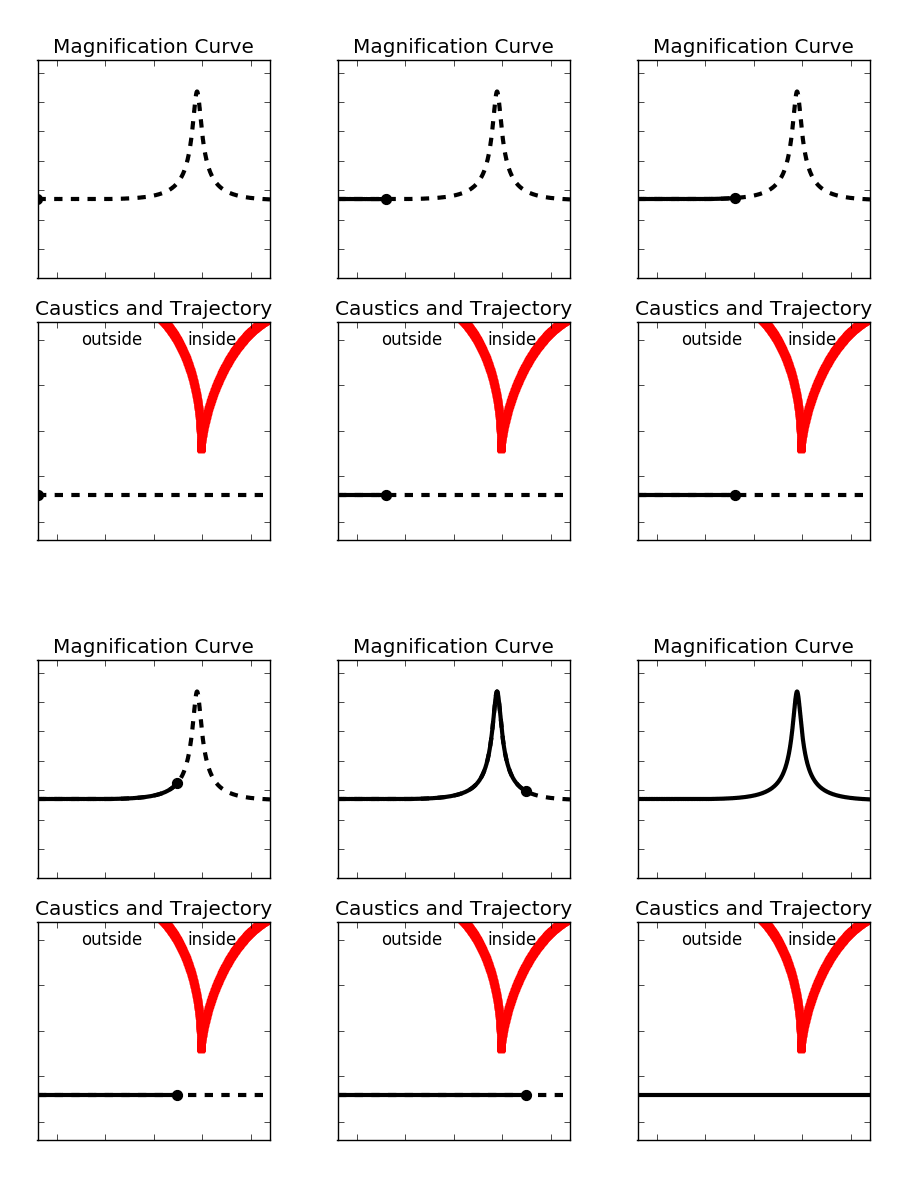
Notice the single peak and rounded form of the cusp approach. A cusp crossing may also appear to be a single peak if the distance between the cusps is smaller than the diameter of the source. In that case, the caustic entrance and exit merge, producing a single peak but with sharp, rather than smooth shoulders.
Caustics and Finite Source Effects
At a caustic, the mathematical solution to the lens equation gives infinite magnification, but infinite magnification is never observed in practice. Why?
When evaluating the lens equation, we get infinite magnification if we assume the source is a point source, meaning that it is a mathematical point with zero size. In reality, the sources are stars, which have a physical size and therefore a finite extent. The observed magnification of the source is smeared out by the face of the source. If you wear glasses, this is similar to how things appear blurry if there is a smudge on the glasses. In practice we calculate the magnification of a source by integrating the magnification pattern across the face of the source.
The animation below compares a caustic entrance for a point source (dotted line) to a source with radius 0.01.
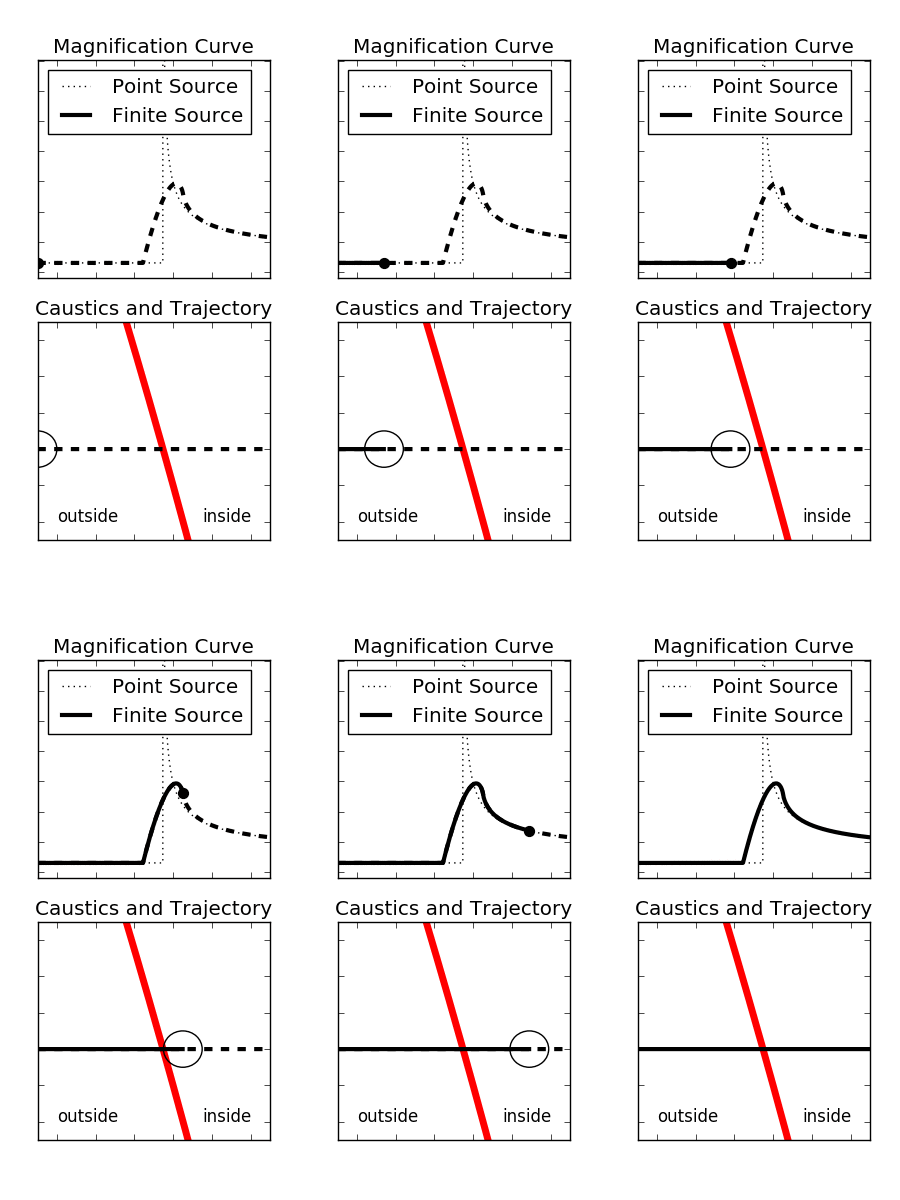
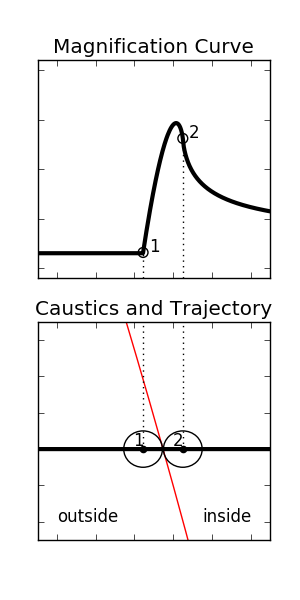
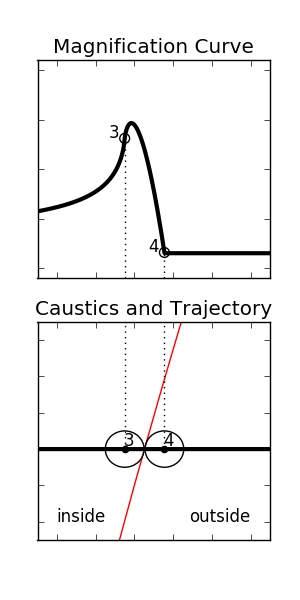
If you are familiar with transiting planet lightcurves, this effect is directly analogous to the points of first and second contact for a transit. The images below show a caustic entrance and the first and second points of contact and a caustic exit and the third and fourth points of contact.