Worksheet for MOA-2013-BLG-605L
Models of microlensing events have quite a number of parameters which makes for a complex parameter space. In addition there are several degeneracies, meaning that models with different parameters can create a very similar lightcurves. For some events this can make it difficult to conclusively infer the nature of the lensing system. Follow-up observations like high-resolution imaging can help to detect or place constraints on the flux from the lens, which can be decisive in determining the mass of the lensing system. MOA-2013-BLG-605L is a good example of such a case. See Sumi et al. 2016 ApJ 825, 112 for a full description.
Use the methods outlined in estimating parameters to derive approximate values for the microlensing model parameter.
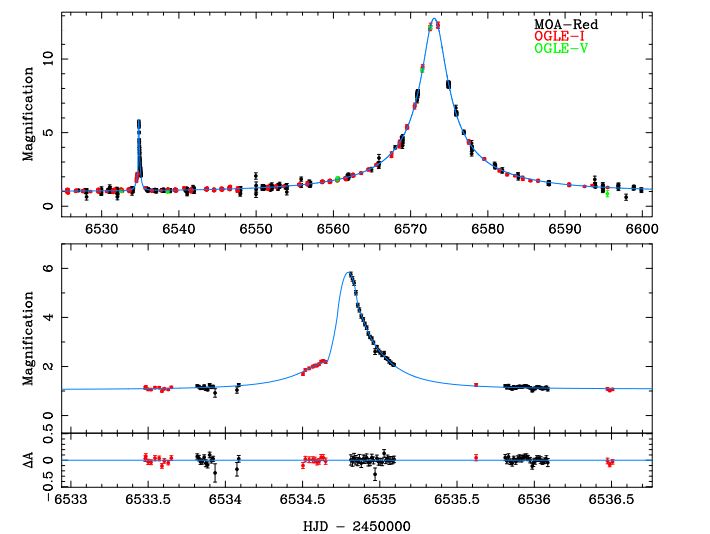
Parameters of the Underlying Stellar Event
Based on the microlensing light curve, figure out the following properties of the microlensing event
| Your answers | ||
|---|---|---|
| Time of the peak of the event = t0: | ||
| Change in magnitude = Δm: | ||
| Maximum magnification = Amax: | ||
| Impact parameter = |u0|: | ||
| Magnitude at Half-Maximum = | ||
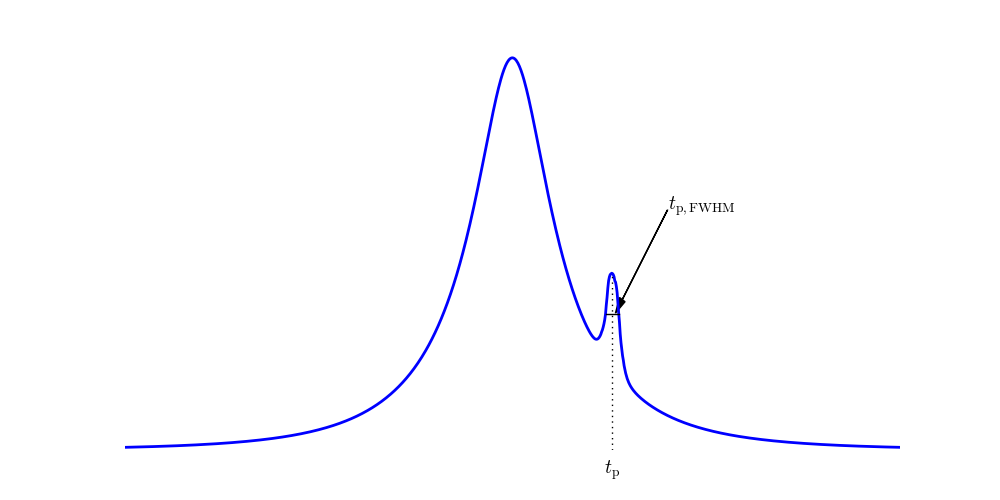
| Full Width Half Maximum = tFWHM: | ||
| Einstein Timescale = tE: |
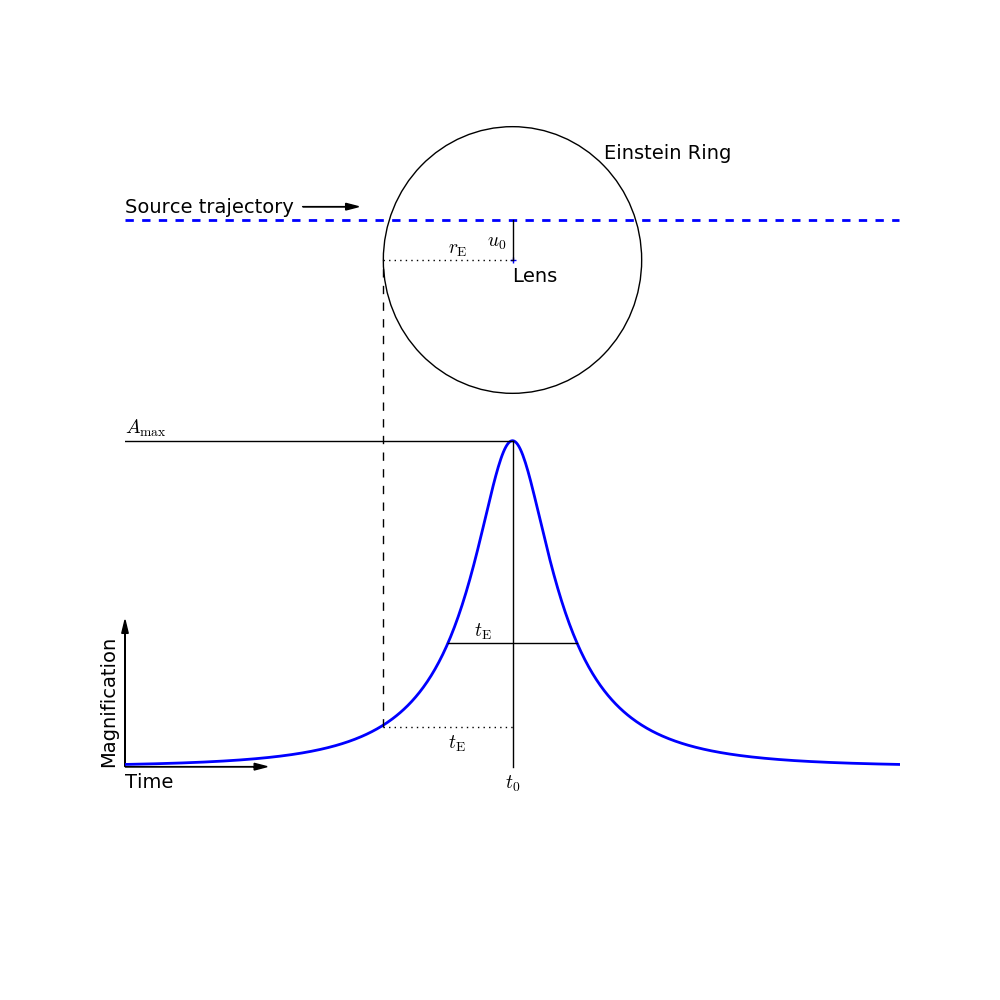
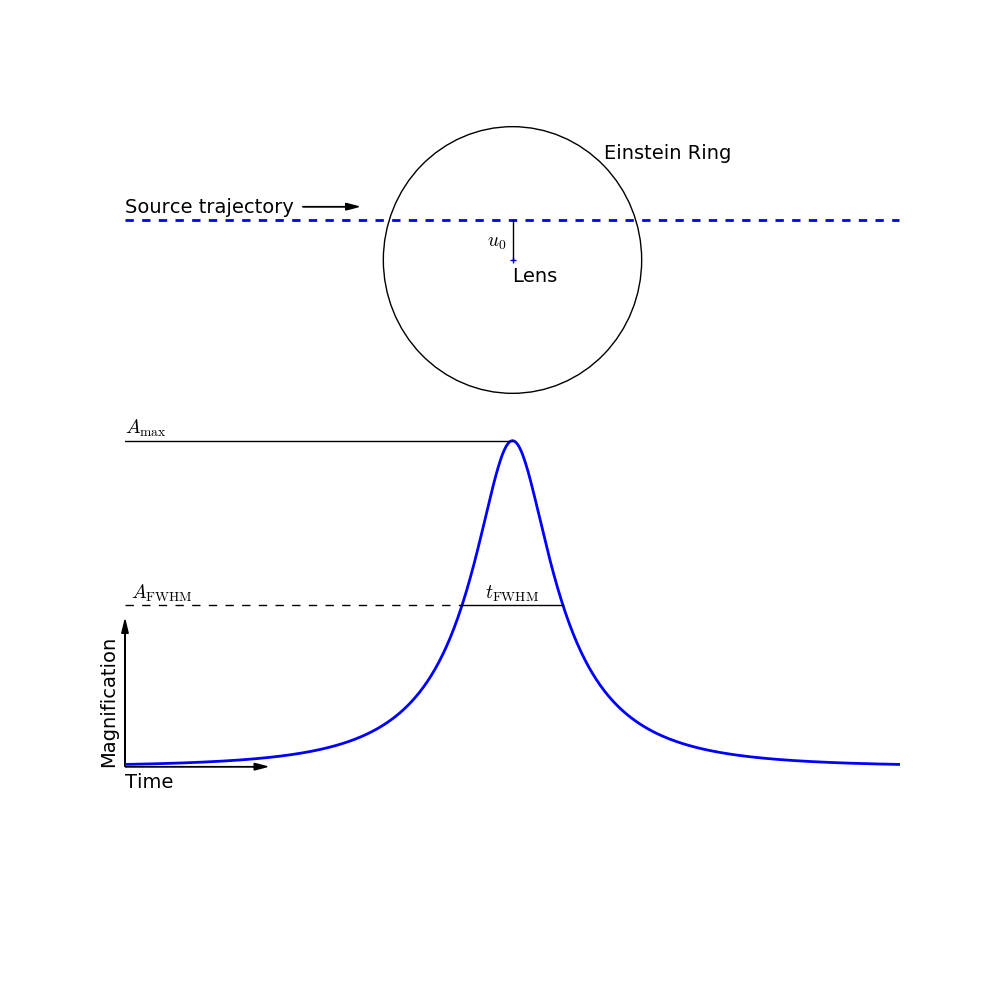
Parameters of the Planetary Event
1. Where is the planet?
| Your answers | ||
|---|---|---|
| Time of the the planet perturbation = tplanet : | ||
| Time scaled to the Einstein timescale = τ = |tplanet - t0|/tE : | ||
| Source-lens separation = u = √(u02 + τ2) : | ||
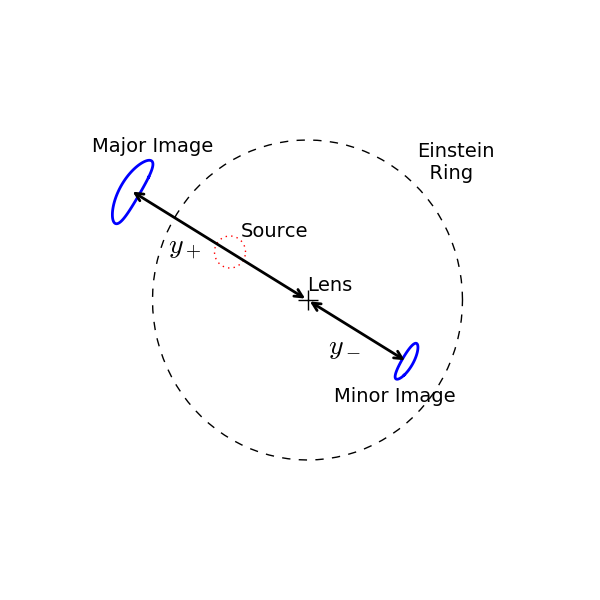
| y± = ± (½) (√(u2 + 4) ± u) : | ||
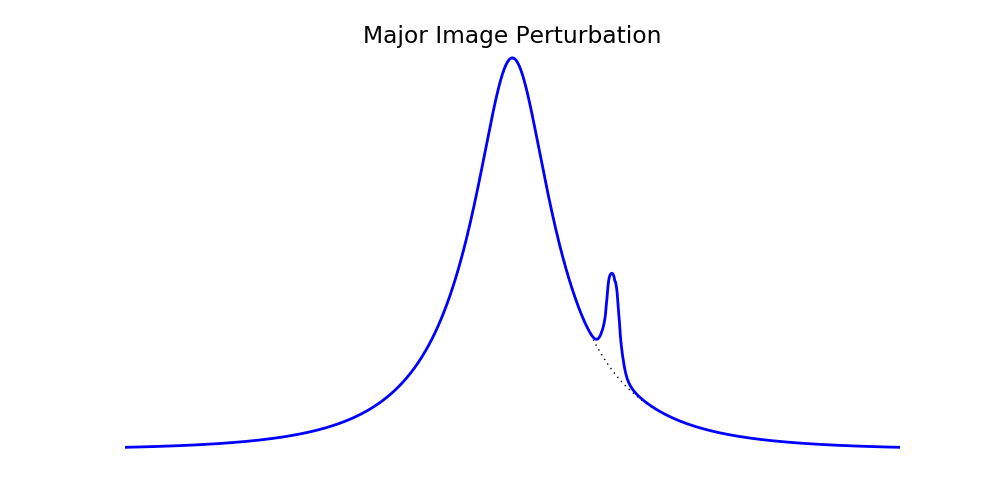
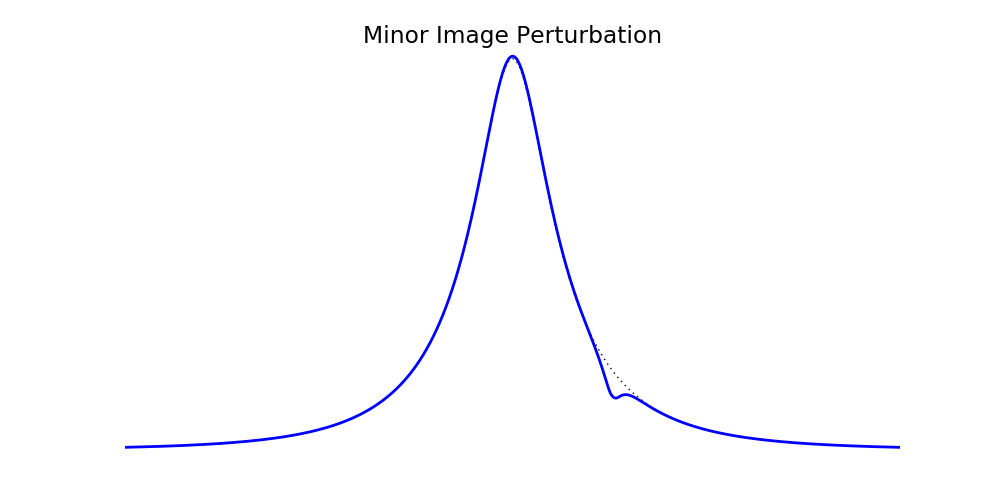
| Is the perturbation a major image (+) or minor image (-) perturbation? | ||
| Location of the planet = s : |
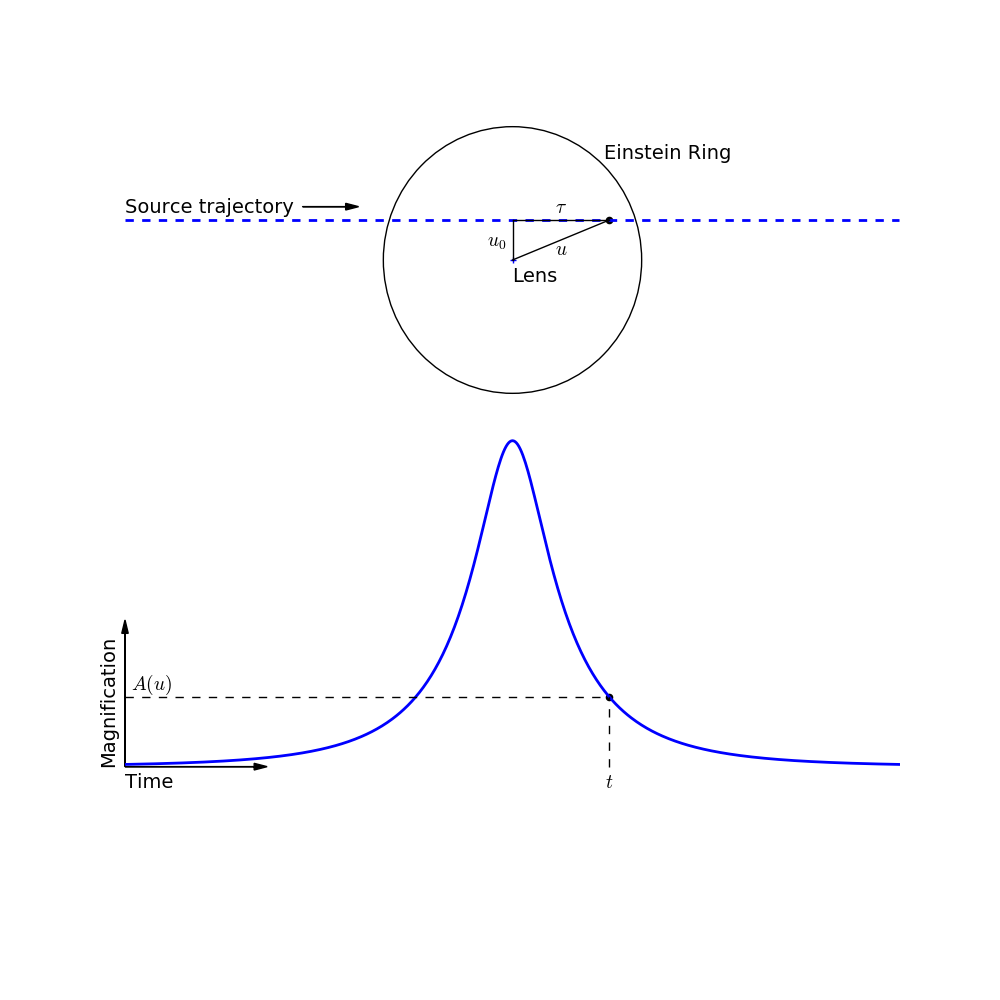
2. What is the mass ratio between the planet and the star?
| Your answers | ||
|---|---|---|
| Planet Einstein Timescale = tp,E ~ tFWHM : | ||
| Mass Ratio = q = (tp,E / tE)2: |
| Planet | q = Planet Mass/Sun's Mass |
|---|---|
| Jupiter | 10-3 |
| Neptune | 5 x 10⁻⁵ |
| Earth | 3x 10⁻⁶ |
| Your answer | ||
|---|---|---|
| Is the planet more similar to Earth, Neptune, or Jupiter? |
How well did you do?
Remember that these methods are approximate - they are used to find a good starting point for analysis. It’s important to remember that the approximation works less well as s–> 1.
IF the light curve is in magnitudes (rather than magnification): We’re assuming zero blending, i.e. that all the light that you see is from the source star. If there is some other (non-lensed) light blended with the light curve, then the true magnification is higher. How do your answers change if you assume that half of the baseline flux is due to a blend? What if 90% is due to a blend?