Impact parameter sign degeneracy
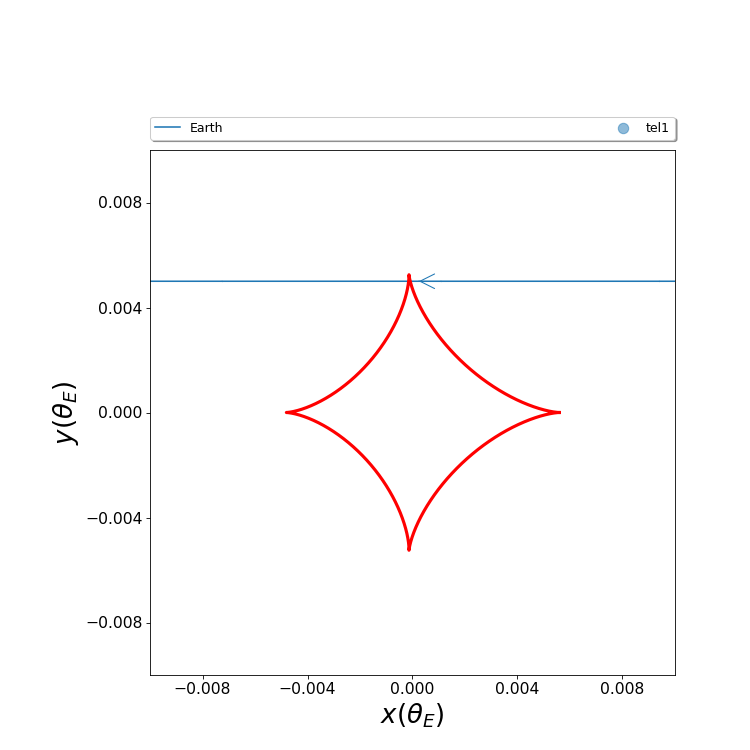
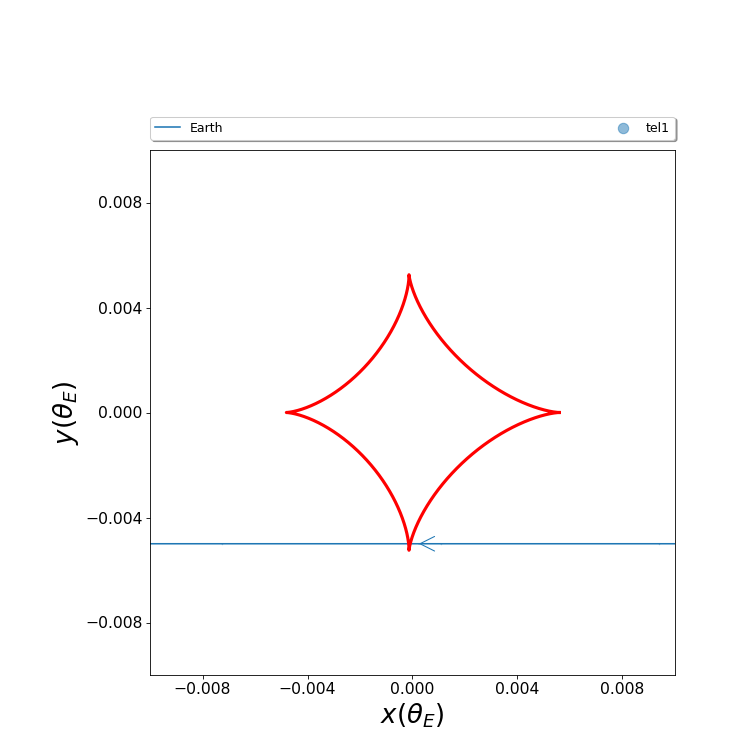
This degeneracy arises from symmetries in the caustic structure. The caustic is defined in lens-centered coordinates, such that the impact parameter, u, can take positive and negative values.
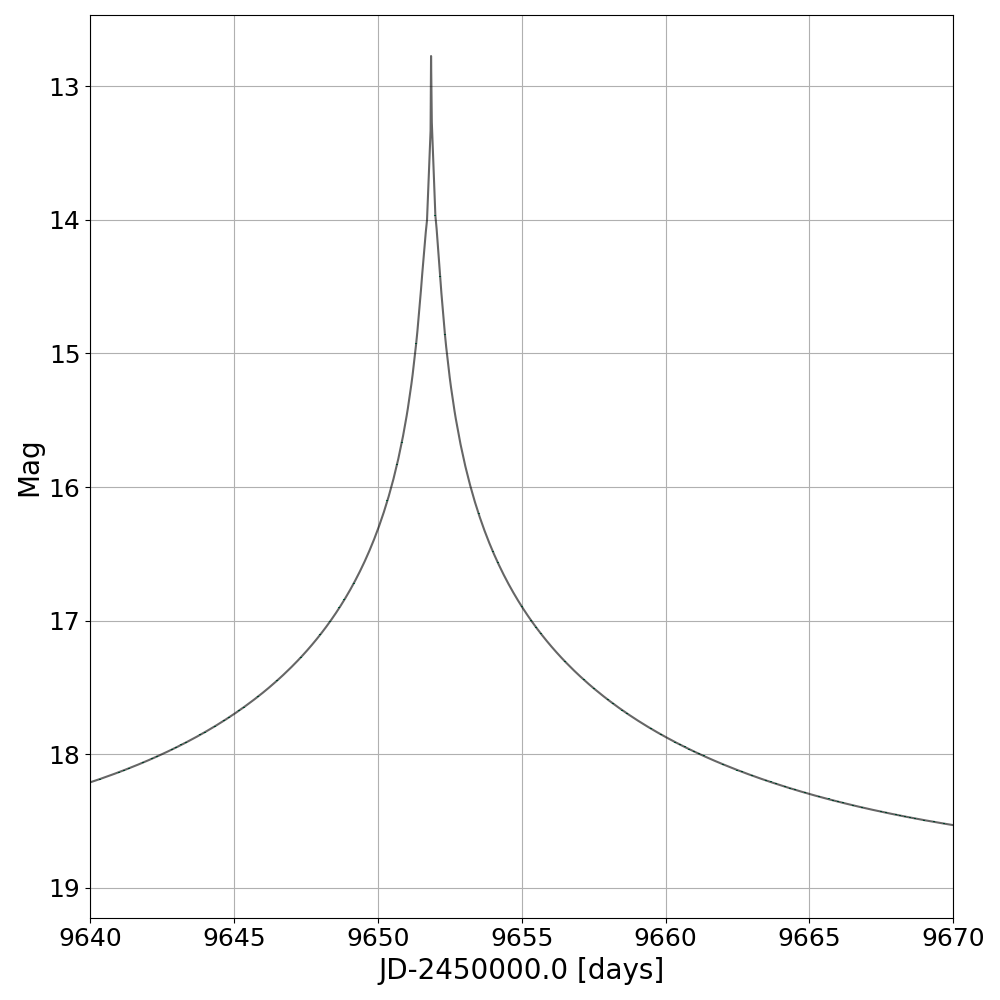
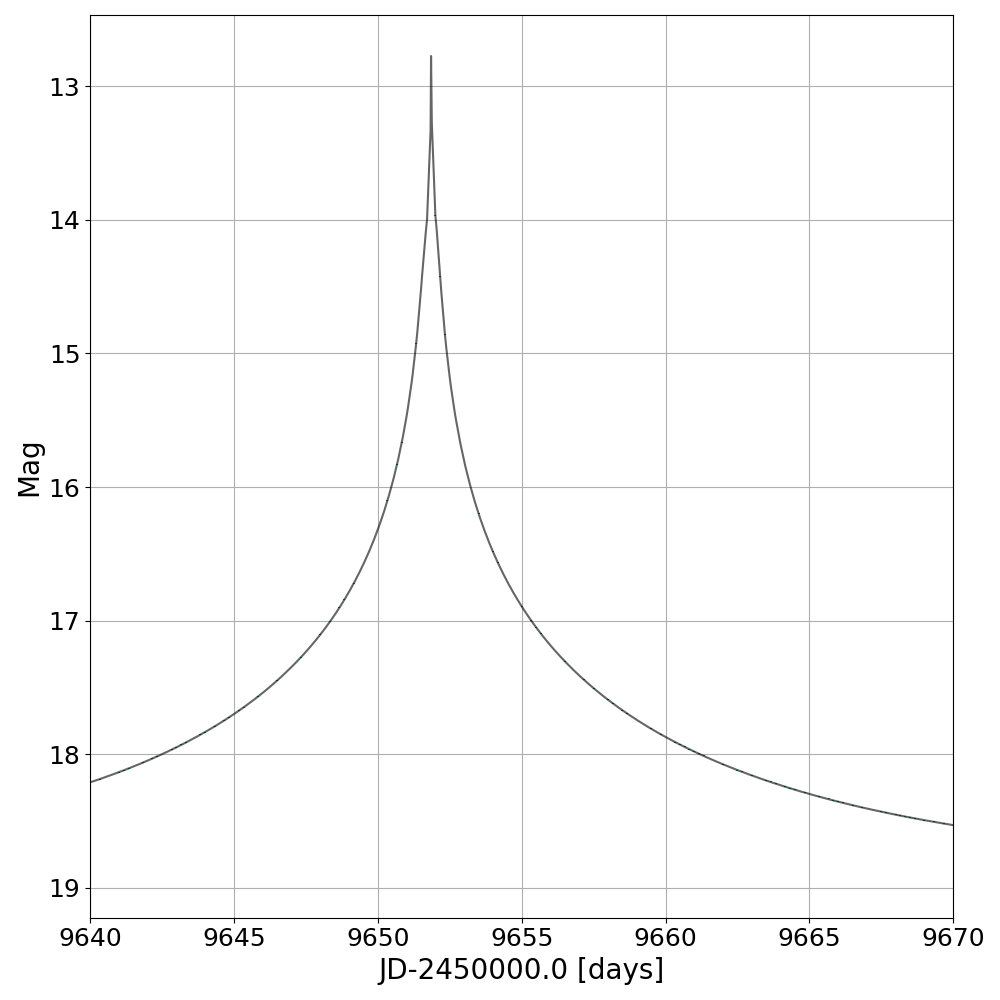
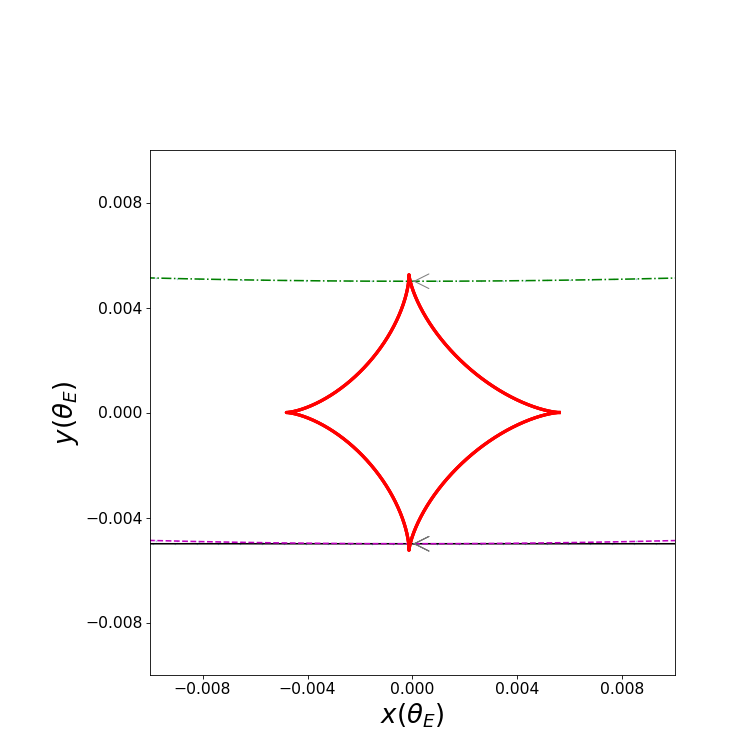
For the binary-lens case shown below, the lens-source relative trajectory means that the source intersects the caustic in two places where the magnification is identical, producing an identical lightcurve. These points occur at u and -u.
In point-source, point-lens models, the caustic is a point. Since this is symmetrical from all directions, the models do not have an α parameter, but the same impact parameter degeneracy exists.
The same phenomena has been observered in events with a measureable annual parallax
signature, such as Dominik et al.(2018).
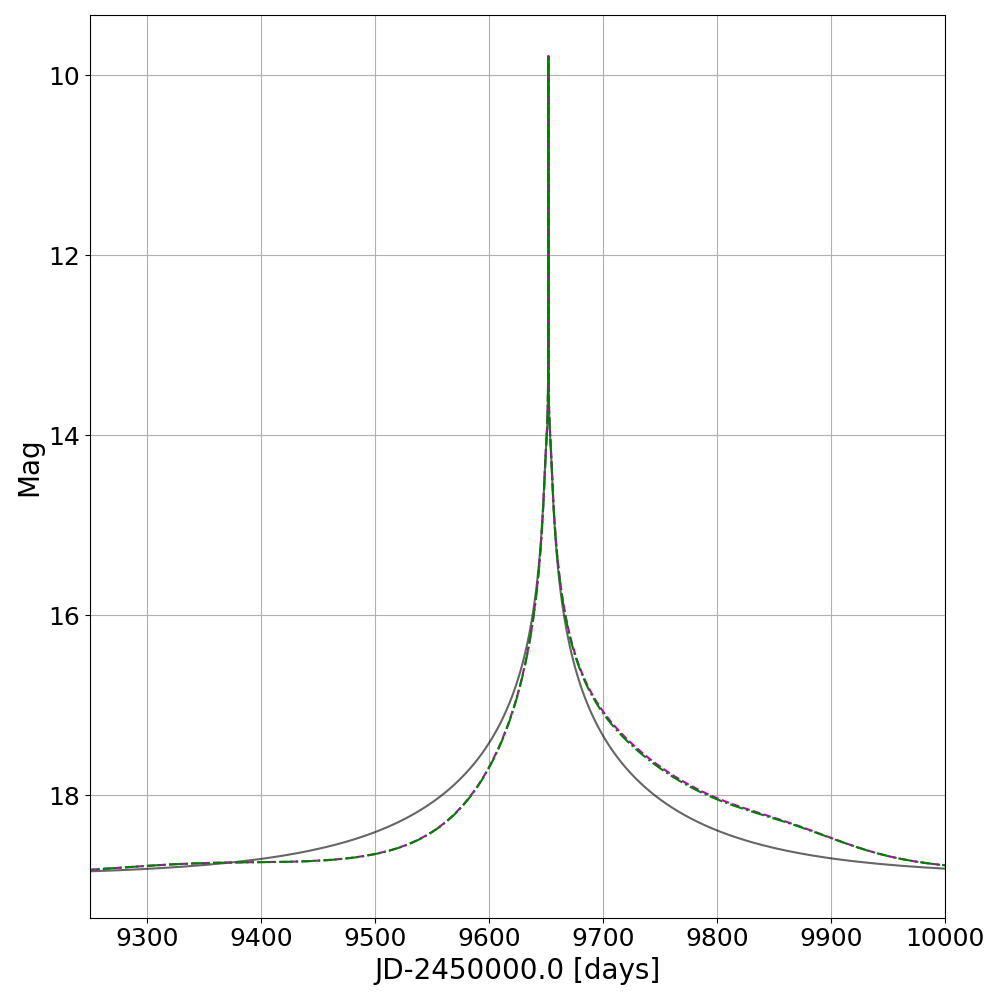
Parallax affects both single and multiple lens models by introducing a skew
(or in extreme cases a sinusoidal curve) into the lightcurve on top of the ‘static’
microlensing signature, as illustrated below.
|
|
The caustic for a given single or binary model remains the same shape; the effect
of annual parallax is to introduce a curvature into the relative lens-source
trajectory. This is the result of the observer moving during the event.
There is still a u0 degeneracy if this curve trajectory intersects
the caustic at the same angle α due to the symmetry of the caustic.